
 Posted by
 Pitchfork Media and the Circuit of Culture: Transforming Music Journalism.
In 1996, Ryan Schreiber introduced Pitchfork Media in the heart of his childhood home in Minneapolis, starting a transformative era in music journalism (Pitchfork, 2021). Pitchfork Media experienced a surge in subscribers and readers by the mid-2000s, and Pitchfork Media was known under the URL pitchformedia.com. The original URL of Pitchfork, pitchfork.com, was owned by “Livestock World,” until around 2006 (Hieggelke, 2011), as shown in Figure 1. In the 2000s it was relatively easy to acquire domain names especially if someone had more fame than others (Hieggelke, 2011); That’s how they obtained the URL they have today. In Figure 2 you can see the website’s version from 1999, and in Figure 3 a photo of pitchfork.com after Ryan Schrieber purchased the domain name in 2007.

Figure 1: The initial domain name pitchfork.com, shown as “Livestock World” in 1996. 
Figure 2: This figure shows the 1999 version of Pitchfork’s website, reflecting the early stages of its digital footprint and design aesthetics in the late 1990s 
Figure 3: This figure depicts the Pitchfork website after Ryan Schreiber’s successful acquisition of the pitchfork.com domain, showcasing the updated branding and interface.
Pitchfork wasn’t another publication; it was a response to the limitations of mainstream music media. Pitchfork’s production deliberately deviated from the norms of music journalism. It aimed to challenge and counteract the narratives and practices prevalent in the music industry during the 1990s. Mainstream media in collaboration with major music labels tended to sideline indie and alternative genres (Hieggelke, 2011). Pitchfork emerged as a guiding light for these overlooked genres by focusing on those that lacked representation (Hieggelke, 2011). This approach not only diversified music journalism but also questioned existing homogeneity.
The depiction of music on Pitchfork stood apart from its mainstream counterparts, representing lesser-known artists. Schreibers’ dissatisfaction with conventional music journalism led him to create a platform that celebrated uniqueness and nonconformity (Hieggelke, 2011). Pitchfork reviews and articles often went beyond providing criticism exploring the cultural, social, and even political dimensions of music (Hieggelke, 2011). This expanded perspective not only enhanced the content but also redefined the scope of music journalism, offering representation to genres that were otherwise unknown.
At the core of Pitchfork’s principles was an opposition to corporate influence. The development of this identity involved decision-making that consistently questioned how corporate interests impacted the music industry. The discontent with trends was evident in their content (Hieggelke, 2011). Additionally, Pitchfork adopted a fan-centric approach in their reviews and articles, offering a unique voice within music journalism. This process of establishing their identity played a role in the site’s success, as it resonated with an audience who felt disconnected from how mainstream media covered music.
Furthermore, Pitchfork’s identity was greatly shaped by Minneapolis alternative music scene. The city’s indie music scene, renowned for its authenticity and raw passion paralleled Pitchfork principles (Hieggelke, 2011). The platform became a conduit for these sounds to reach a wider audience while simultaneously influencing and being influenced by the ever-evolving music landscape. Throughout the years Pitchfork has evolved its production by adapting to changes in the music industry, technology advancements, and shifting audience preferences. Pitchfork has played a role in shaping music journalism and exerting influence over the music industry. Its journey from being a voice against mainstream music journalism to becoming a well-respected publication reflects the ever-changing nature of the music journalism scene. Throughout its early evolution, Pitchfork has always maintained its commitment to providing a perspective, which has remained central to its identity.
Pitchfork’s Influence on Music Journalism
As for the consumption of the site, the emergence of Pitchfork marked a shift in consumer behavior particularly within the indie music scene. Initially catering to a niche audience, this platform gained prominence by featuring up-and-coming artists who were not widely known. This had an impact on the indie music landscape (First Monday, 2014); By showcasing known or unconventional acts Pitchfork provided these artists with unparalleled exposure and credibility. As a result, they experienced benefits such as increased sales and recognition within the indie music market.
Moreover, Pitchfork’s role in influencing consumer patterns was substantial. Enthusiasts of the indie scene frequently turned to Pitchfork for music recommendations, relying on its reviews to discover new and non-mainstream musical experiences (First Monday, 2014). This reliance on Pitchfork shaped the consumption habits of its audience, directing them towards unique musical journeys that were often overlooked by more mainstream platforms. The divergent approaches of Pitchfork and traditional platforms like Rolling Stone offer a stark contrast in shaping consumer tastes (First Monday, 2014). While Pitchfork’s indie-centric focus guides consumers towards niche, lesser-known artists, Rolling Stone caters to a broader spectrum, including mainstream and well-established acts ( Brasher, 2013). This difference in coverage strategies significantly influences consumer consumption patterns. Pitchfork directs its audience towards emerging, niche music, shaping a unique musical taste and culture. In contrast, Rolling Stone plays a role in popularizing commercially successful artists, influencing a wider audience towards well-known music.
Pitchfork’s influence extends beyond consumer behavior, significantly impacting artists’ careers and identities. For many emerging artists, a positive review or mention on Pitchfork has been a career-defining moment (Brasher, 2013). Such recognition not only validates their work but also elevates their profile within the indie music community. This validation has often played a role in shaping the paths of many artists’ careers. As Pitchfork’s influence grew its identity also evolved, as it started as a platform primarily focused on music but gradually became a tastemaker across various music genres. This transformation reflected Pitchfork’s shift from a niche indie-focused site to an influencer in the music industry.
The site’s emphasis on creating content and unconventional reviews had a significant impact. It drove traffic to their website and fostered active engagement on social media platforms(The Guardian, 2015). This was quite different from the print-bound music press, which often struggled to replicate such engagement in the digital space. In their commitment to innovation, Pitchfork introduced the Cover Stories feature, which combined elements of traditional print design with digital technical expertise resulting in a unique and captivating online experience. Their innovative approach not only attracted a wide audience but also caught the attention of larger media conglomerates leading to their eventual acquisition by Condé Nast(The Guardian, 2015), which greatly influenced the production of the site. Artists who aligned with Pitchfork’s aesthetic or received favorable reviews often incorporated this association into their own identities. Pitchfork’s influence has proven to be an advantage for many artists as it helps enhance their reputation and reach a broader audience (Brasher, 2013). This beneficial relationship between Pitchfork and artists highlights the platform’s impact on music consumption, its role in shaping the identities of featured artists, and the shift in production of the site.
We can see examples of how Pitchfork Media has influenced artists’ careers through case studies of bands like Arcade Fire and M.I.A. These musicians, among others, have experienced firsthand the transformative power of positive reviews from Pitchfork. For Arcade Fire, a glowing review and high rating from Pitchfork were game changers that propelled them to heights of recognition and success within the music industry (Carr, 2005). This exposure not only boosted their album sales but also played a crucial role in their meteoric rise to fame. Similarly, M.I.A.’s career trajectory was significantly impacted by Pitchfork’s coverage and attention which provided her with increased visibility and critical acclaim (Carr, 2005).
These examples showcase the impact that Pitchfork has on the music industry demonstrating its ability to shape the paths of up-and-coming artists. The rating system, which assigns albums a score out of 10 plays a role in influencing music consumption patterns, particularly within the indie music scene (The Guardian, 2015). This system has become a standard for measuring quality and success in the industry. A high rating from Pitchfork can launch an artist into overnight fame greatly influencing consumer interest, attention from industry professionals, and album sales (Hutsul, 2005). On the side, a low score from Pitchfork can have detrimental effects on an artist’s career. Negative ratings can breed skepticism among consumers and diminish an artist’s reputation in the industry (Hutsul, 2005). This rating system has bestowed upon Pitchfork a sense of credibility and authority that makes its critical judgments a force in shaping consumers’ choices regarding music engagement and support.
This aspect of Pitchfork’s influence acts as a double-sided sword for artists within the music scene. As Pitchfork continues to evolve its impact, on music journalism remains undeniable. From molding consumer behavior to shaping artist identities Pitchfork plays a huge role in music journalism. Pitchforks’ impact on the music scene and beyond is a true testament to its influence as a tastemaker and cultural trendsetter.
The Role of Pitchfork in The Indie Music Scene
Pitchfork’s journey from being a voice in the world of music journalism to becoming more mainstream is seen in how it has influenced artists like Arcade Fire and M.I.A. The platform’s ability to shape their careers has solidified Pitchfork’s position as a tastemaker. This change in identity has had implications for Pitchfork’s role within the informal norms of the music industry. The shift from being focused on indie music to becoming a key player in the broader landscape of music journalism highlights the dynamic nature of the site’s identity.
Navigating regulations played a role in shaping Pitchfork’s trajectory. Over time the publication not only followed its own unwritten guidelines but also had to align with wider industry conventions. As Pitchfork expanded its coverage to include mainstream content it faced the challenge of balancing its core values with the expected norms set by both indie and mainstream music scenes. This transition required maneuvering through complex industry regulations and meeting audience expectations, ultimately becoming a defining factor in Pitchfork’s fame.
As Pitchfork gained popularity its ratings and reviews went beyond opinions; they became informal yet influential guidelines that shape music consumption and artist recognition. The platform reviews and scores play a role in determining an artist’s success or failure within the industry’s unwritten rules. This influence extends beyond criticism; it impacts the popular dynamics of the music industry especially in the indie and alternative scenes. Pitchforks’ role in the world of music journalism is complex, the sites impact on artists’ careers, evolution as a platform, and effect on music consumption patterns highlights its importance in shaping the music landscape. From providing reviews to establishing industry standards, Pitchfork remains a defining force in the realm of music journalism influencing artists’ trajectories and guiding choices made by music consumers.
Digital Transformation and the Future of Pitchfork in Music Journalism
Pitchfork’s rise during the era was marked by its early and strategic online presence, setting it apart from traditional music magazines that were slow to adapt to the internet landscape. This early adoption gave Pitchfork an advantage in the digital realm. Their unique 10.0 rating system further solidified their uniqueness within the field of music journalism. Although this system was sometimes mocked, it became a defining feature of Pitchfork’s character ensuring its continued relevance in a changing digital world. Pitchfork’s impact also reached the way people consumed music-related content. Through their provision of material that encompassed various musical discoveries (The Guardian, 2015), they managed to attract a younger audience who were progressively moving away from conventional media consumption habits.
However, in the current generation Z, Pitchfork has lost its buzz, so much so that many people have never heard of this site. The reasons why this is happening can be traced back to the evolution of listening to music; From cassettes to CDs, to the Walkman, and finally, in our date and time, streaming. Streaming allows for a huge volume of daily music content to be released, making it challenging for any publication to wield influence on music tastes. As the music industry continues to develop, music is also largely influenced by social media. Nowadays, most artists will look into creating a TikTok account to share their music and reach their selected audience, without any influence from music journalists.
Pitchfork, however, should be different. The site is known for highlighting niche music but with the rise of streaming platforms, the site has become more inclined to give positive reviews to music that has the most streams. This created frustration within the Pitchfork fanbase, particularly, the old fans that have been following the site since 2006. This sentiment is exemplified in discussions among music enthusiasts, which are often found on platforms like Reddit. In the subreddit “Letstalkmusic,” a user with the handle f u/zenarcade3 discusses why they have stopped considering Pitchfork reviews, as shown in Figure 4. Other parts of the post have been excluded, but what is highlighted here are the reasons why this particular person has decided to stop reading Pitchfork reviews, after 30 years of being a devoted fan. The Redditor accuses the platform of dishonesty and of creating music reviews only for profit, highlighting that “Cardi B “Bodak Yellow” was Song of the Year in 2017. I don’t need to explain more. ”This shows the user’s frustration with the reviewing platform, and how they started giving good reviews to already well-known artists, which slowly dwindled their fanbase. As you delve more into the comments of many posts under “Letstalkmusic,” more and more previous users of Pitchfork also share the same sentiment. Another post made by u/NyarUnderground, shown in Figure 5, opens the discussion for users to talk about why Pitchfork is so wildly hated on their subreddit. Words like “insufferable,” “less useful,” “controversial,” and “hot garbage” are used to describe the site.


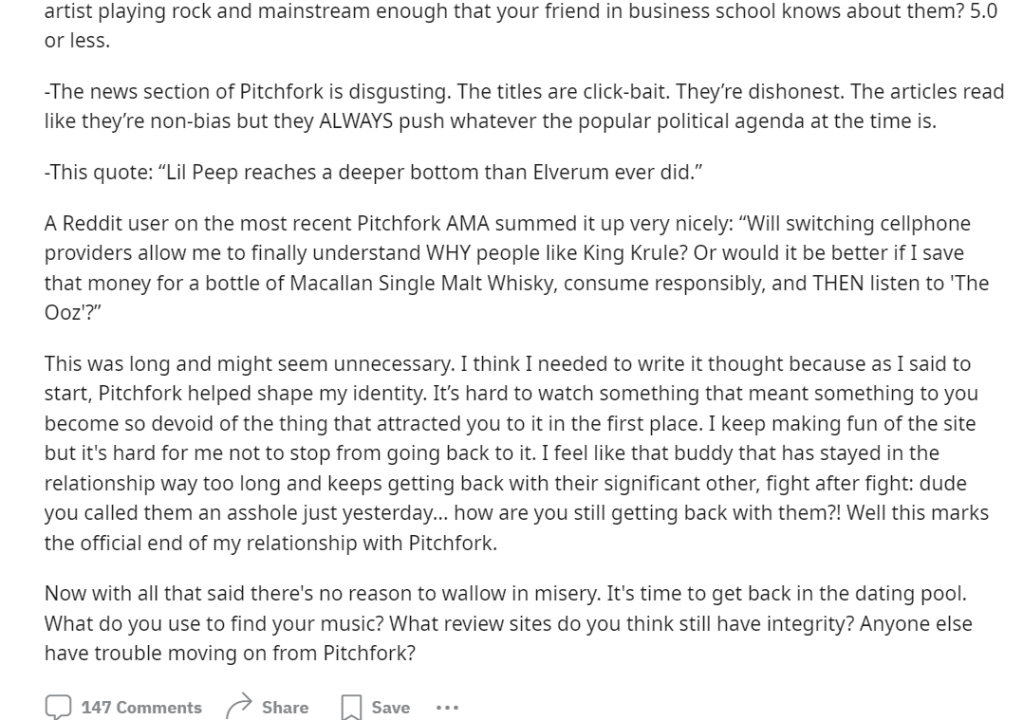

Figure 5: This figure presents another Reddit conversation initiated by u/NyarUnderground, where users discuss their grievances and criticisms of Pitchfork, using terms like “insufferable” and “hot garbage” to describe their current view of the site. 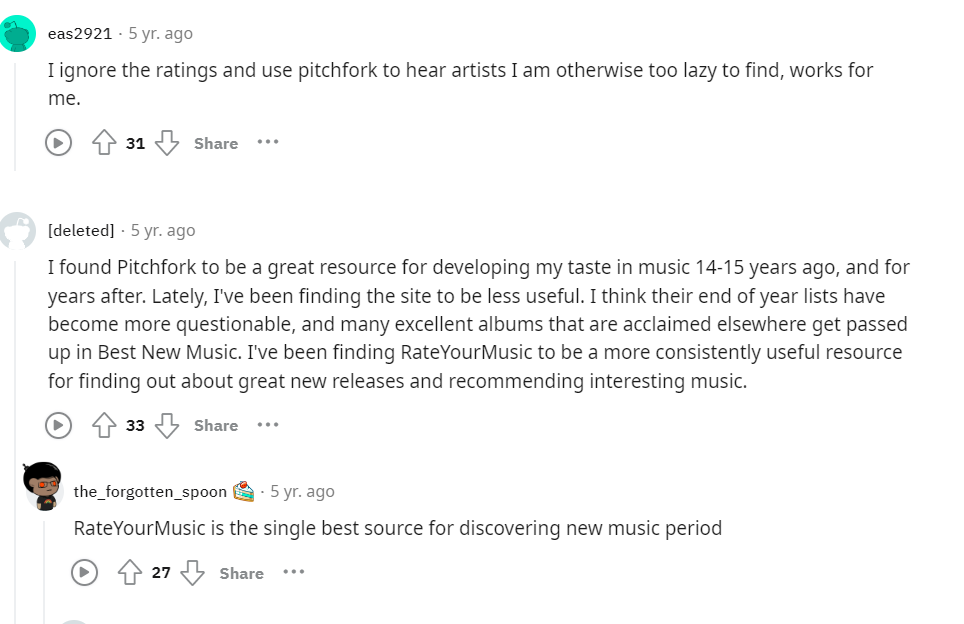
Figure 5: part 2, comments under the post with similar opinions. 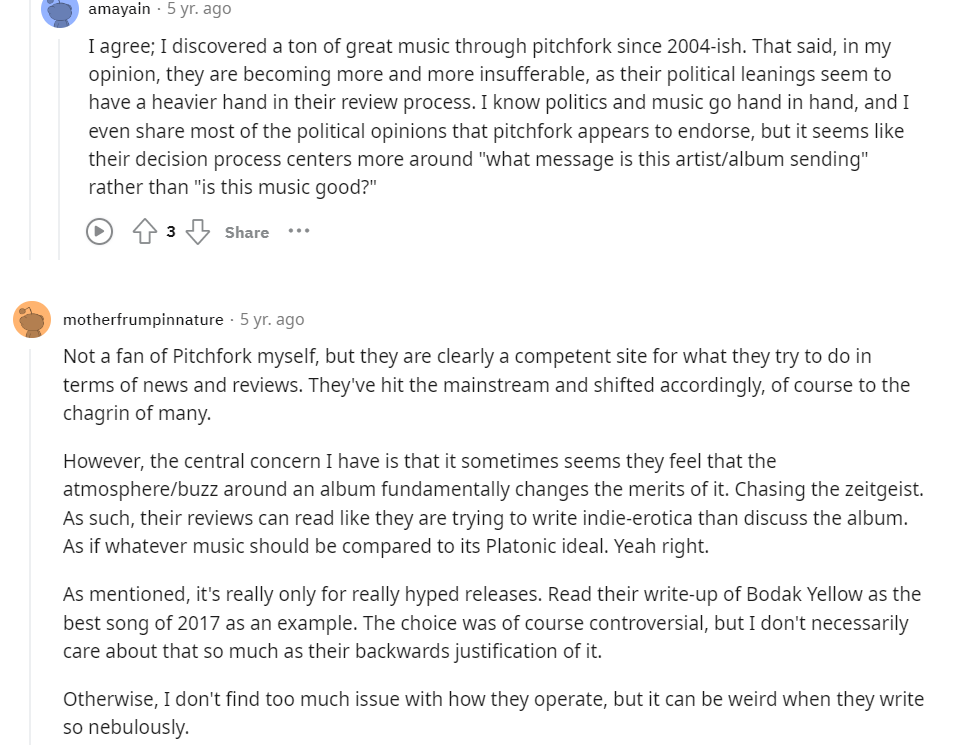
Figure 5: part 3, comments under the post with similar opinions. 
Figure 5: part 4, comments under the post with similar opinions.
While its fanbase slowly diminishes, Pitchfork is still a successful site. As it gained influence, it expanded into new domains like festivals, video platforms, and specialized journals, it diversified how audiences could engage with music media(The Atlanta Journal, 2005). This expansion catered to a variety of consumption preferences, allowing audiences to interact with Pitchfork’s content across various mediums. Whether through in-depth articles, interactive digital features, live festival coverage, or multimedia content, Pitchfork offers a range of options to suit different consumer tastes and preferences(The Atlanta Journal, 2005). While it has lost its edge as an indie-music curator, Pitchfork still has some indirect influence on artists through the new domains.
Overall, Pitchfork’s journey through the circuit of culture in music journalism reflects a nuanced understanding of the evolving media landscape. Its ability to adapt to changing trends, while maintaining a distinct voice, underscores the importance of innovation and adaptability in media. As Pitchfork continues to navigate the ever-changing world of music and media, its legacy in music journalism remains pivotal in the history of modern media.
References
“View of Fifteen Years of ‘Utopia’: Napster and Pitchfork as Technologies of Democratization: First Monday.” 2014. View of Fifteen Years of “Utopia”: Napster and Pitchfork as Technologies of Democratization | First Monday. https://firstmonday.org/ojs/inde
“Creating a culture: “Pitchfork” media’s textual and cultural impact on “Rolling Stone” magazine.” Brasher, Emily. University of Missouri – Columbia ProQuest Dissertations Publishing, 2013. 10157262.
Christopher Hutsul Sneakernet. “Pitchfork does its work in indie music industry”. The Toronto Star. December 19, 2005, Monday. https://advance-lexis-com.proxy1.library.jhu.edu/api/document?collection=news&id=urn:contentItem:4HV6-3500-TWMB-52WH-00000-00&context=1516831.
“How to make it in music”. The Atlanta Journal-Constitution. August 5, 2005 Friday. https://advance-lexis-com.proxy1.library.jhu.edu/api/document?collection=news&id=urn:contentItem:4GTC-2PC0-0026-G3WV-00000-00&context=1516831.
By DAVID CARR. “Garage Rock Meets Garage Critics”. The New York Times. August 29, 2005 Monday. https://advance-lexis-com.proxy1.library.jhu.edu/api/document?collection=news&id=urn:contentItem:4H09-6S00-TW8F-G2SK-00000-00&context=1516831
Hieggelke, Brian. 2011. “The Curators of Cool: A History of Pitchfork Media.” Newcity Music. https://music.newcity.com/2011/07/14/the-curators-of-cool-a-history-of-pitchfork-media/.
“What Did Pitchfork Get Right When Most Music Magazines Are Losing Sales?” 2015. The Guardian. Guardian News and Media. October 16. https://www.theguardian.com/media/2015/oct/16/pitchfork-music-magazines-nme-q-mojo.Ryan Dombal, Anna Gaca. 2021. “The History of Pitchfork’s Reviews Section in 38 Important Reviews.” Pitchfork. May 25. https://pitchfork.com/features/lists-and-guides/the-history-of-the-pitchfork-reviews-section-in-38-important-reviews/.
 Cultural History of the Internet