
 Posted by
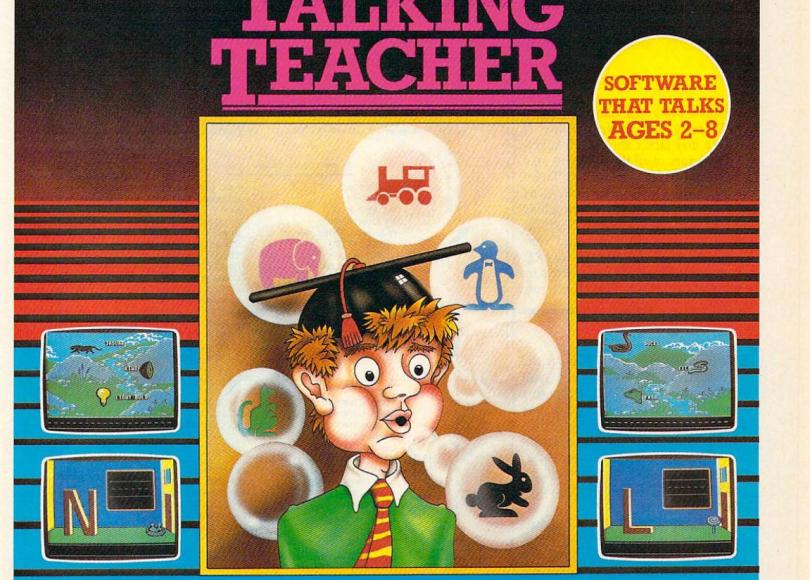
 “Talking Teacher,” from the 1986 September issue of the “Compute!” magazine is an advertisement promoting a software that can be used in the home computer to educate young children. It contains graphics, text, speech and interaction to teach children the alphabet, simple words, spatial relationships and pronunciation. According to US census data in 1984 only around 8.2% of households had a home computer. Of those with home computers, high income families were more likely to own one than low income, and families with children often had the children use the home computers. Thus, it is evident that this advert is mainly targeted towards wealthier families with children. While the visual depicts a student, this ad is clearly not marketed towards children. The text is too complex for children to understand and among the graphics are samples of the software material which would be too difficult for children to understand. Clearly, this is directed towards the adults who might want to buy one for their children.
On the advert is the image of a white boy wearing a graduation cap. This imagery represents the type of audience the ad wants to target: white families who are invested in their children’s education from an early age, and live wealthy enough to buy home computers as well as accompanying software. The audience is assumed to be white, due to the large gap in income and education between white families and families of color. The contents of the “Talking Teacher” also provides us with a perspective into its representation. The ad claims the software will teach young children capital and lowercase letters and basic vocabulary, presumably all in English. This software is clearly marketed only for an English-speaking demographic.
From the graphic design of the ad, we can see that it is not for a technical audience, but a general one. Unlike articles and ads that ran in the 73 magazine or Byte that depicted technobabble on computer science or advertised new inventions as described in Kevin Driscoll’s “Computerized Hobby Radio,” this ad is for those such as parents and teachers who are not well versed in computer technology. The vocabulary of the description is simple and straightforward with little to no technical terms. In fact, the ad even says that “no special hardware is required to make your computer talk” reassuring customers that no extra technical knowledge is needed to use it. Another example of this is how the computer is anthropomorphized to make it easier for readers to understand its function. Instead of the computer playing audio, it “talks.” Instead of the computer being an educational aide, it is a “teacher.” This language will help familiarize a reader who doesn’t understand computers to its usage by tying a strange new action or role to a known and familiar concept. Most of the ad is composed of bright graphics and negative space that will catch the attention of casual viewers.
 Cultural History of the Internet