
 Posted by
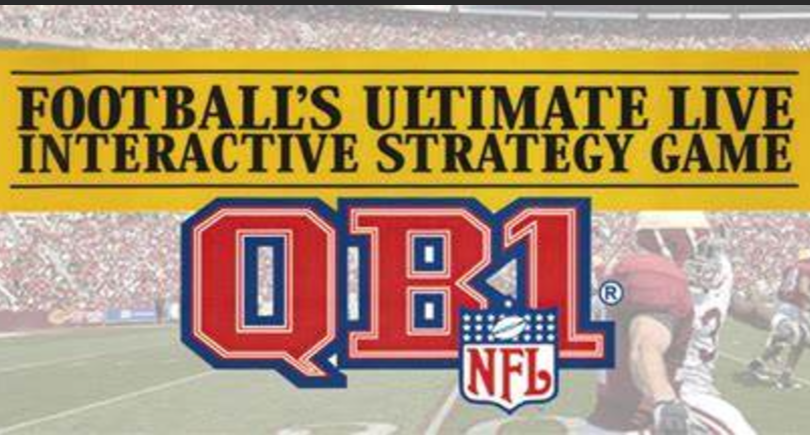
 Football has always been more than just a game. It’s a shared experience, a cultural phenomenon, and a reflection of the values we hold dear such as competition and teamwork. QB1 Trivia, an interactive football trivia game created by NTN Communications in 1984, took this connection to a new level. By creating a trivia game that combined the competitive aspect of professional football with the knowledge of diehard fans. In this groundbreaking development, players would predict the plays of a football game prior to the play happening live. Points would be distributed based on how correct one’s judgment was. QB1 was commonly found in restaurants, bars and other social venues which allowed it to be a very interactive game not only with football but with others as well. As Bernie Woodall states in https://greensboro.com/bar-games-qb1-is-football-played-like-chess/article_d2afe067-43ad-5853-a8d2-896052010556.html\ “QB1 is an esoteric play-along-with-the-real-game sport, in which customers in 800 bars across North America compete with one another. Those who guess what play a quarterback will call before the play starts get the most points.”

Buzztime trivia 2024
Production
Creating QB1 Trivia wasn’t just about building a game. It was about building an experience that enhanced the NFL’s culture. In the 1980s, technology was rapidly evolving, and NTN Communications saw an opportunity to bridge the gap between football fans and interactive entertainment. The challenge in developing a game like this was only the beginning. Developers needed to create a platform that could handle real-time predictions from thousands of players while syncing perfectly with the unpredictability of live NFL games. This required cutting-edge algorithms, perfectly on time servers, and a design flexible enough to adapt to the chaos of sports.
But the innovation didn’t stop at the technology. QB1 Trivia’s creators knew the game’s success relied on more than just its functionality. It needed to connect with the NFL’s fan base on a deeper level. So, they partnered with Dodge to sponsor competitions like the “Battle to the Bowl,” aligning the game with the power and toughness football fans admired.

Internet Archive. “QB1 Trivia” 29 Dec 2001. Accessed December 1, 2024.
https://web.archive.org/web/20041204042314/http://www.qb1.com/index.asp
Hosting the game in sports bars was another genius move by the developers. These venues were already a common gathering spot for fans, making them the perfect places to host communal participation. QB1 Trivia wasn’t just a game you played—it was an event you joined. QB1s slogan as stated on the website was “Don’t just watch the game, be a part of it.”
Consumption
The beauty of QB1 Trivia lay in how it changed the way fans consumed football. Watching a game is usually a passive experience—you cheer, you groan, but you’re ultimately a spectator. QB1 Trivia flipped this script. By asking players to predict plays in real time, it gave fans a way to feel like they were part of the action. Suddenly, they weren’t just watching the game; they were competing in it.
This interactive format wasn’t just engaging—it was social. Hosting QB1 Trivia in social venues transformed game day into a shared experience, where fans could bond over their predictions, celebrate victories, and enjoy a little friendly competition all from the same room. The leaderboard feature added another layer of excitement, allowing players to see how they ranked against others. And let’s not forget the prizes—a Dodge truck wasn’t just a reward; it was a symbol of the stakes involved, blending entertainment with tangible incentives.
At the same time, QB1 Trivia was remarkably inclusive. Its intuitive design and straightforward rules made it accessible to casual fans or otherwise known as “armchair quarterbacks,” while its strategic depth appealed to the most dedicated football watchers. It wasn’t just about knowing football trivia—it was about thinking like a coach, predicting plays, and staying one step ahead. This dual appeal made QB1 Trivia a game for everyone, from casual viewers to die-hard strategists.
Identity
Obviously, QB1 had a rather specific target audience; sports fans, more specifically American football fans. For individual players, QB1 was a platform to showcase their football knowledge and strategic thinking. Predicting plays correctly felt like a personal victory, a way to prove you really got the game.
But QB1 Trivia also created a sense of community. In sports bars across the country, players became part of something bigger—a group of fans who shared their love of football and their competitive spirit. These little communities fostered a sense of rivalry, turning strangers into opponents for the duration of a game.
On a broader scale, QB1 Trivia reinforced the NFL’s role as a cultural institution. By including live NFL gameplay into its platform, the game deepened fans’ connection to the league’s narratives, teams, and players. It wasn’t just about winning a trivia game; it was about being part of the NFL’s story.
Representation
QB1 Trivia reflected and shaped the way we think about football today. On the surface, it was a game about predicting plays. But on a deeper level, it was a celebration of the values football represents: strategy, competition, and expertise. The game’s partnership with Dodge emphasized these themes, linking QB1 Trivia to the so-called no-nonsense spirit of football and the NFL’s culture.
At the same time, QB1 Trivia challenged traditional ideas about football fandom. Unlike classic trivia games, which often reward obscure knowledge, QB1 Trivia focused on real-time decision-making and strategic thinking. This shift made the game more inclusive, welcoming fans who might not know every historical stat but who understood the flow of the game. It was a modern take on fandom, one that valued engagement and interaction over mere knowledge.
The game’s design also played a role in its representation. Its interface mimicked the look and feel of NFL broadcasts, reinforcing its authenticity and positioning it as a natural extension of the sport. By blending the aesthetics of football with cutting-edge interactivity, QB1 Trivia became a bridge between tradition and innovation.

Internet Archive. “QB1 Trivia” 29 Dec 2001. Accessed December 1, 2024.
https://web.archive.org/web/20041204042314/http://www.qb1.com/index.asp
Regulation
Behind the scenes, regulation played a crucial role in making QB1 Trivia work. Technically, the game needed to process thousands of inputs accurately and fairly within a split-second. A challenge that required advanced algorithms and constant maintenance. Any glitches or inconsistencies could undermine the game’s credibility, so getting it right was non-negotiable.
Social regulation was just as important. Hosting the game in public venues like sports bars created an environment where players were naturally held accountable to one another. Cheating or disruptive behavior was discouraged by the communal setting, ensuring the game remained friendly and fun.
Finally, QB1 Trivia had to navigate the broader regulatory frameworks of the NFL and digital gaming. The game relied on live NFL data, meaning it had to operate within the league’s rules and intellectual property policies. It also needed to comply with laws around data privacy and online gaming, ensuring a fair and secure experience for all players.
Conclusion
QB1 Trivia was more than just a clever football game; it was a cultural development that changed the way fans engaged with their favorite sport. By combining the thrill of live NFL gameplay with the excitement of competition and community, it offered a new kind of fandom. A kind that was interactive, inclusive, and deeply immersive. Through the lens of the circuit of culture, we are able to see how QB1 Trivia wasn’t just a product of its time but a reflection of the evolving relationship between sports and technology.
 Cultural History of the Internet